
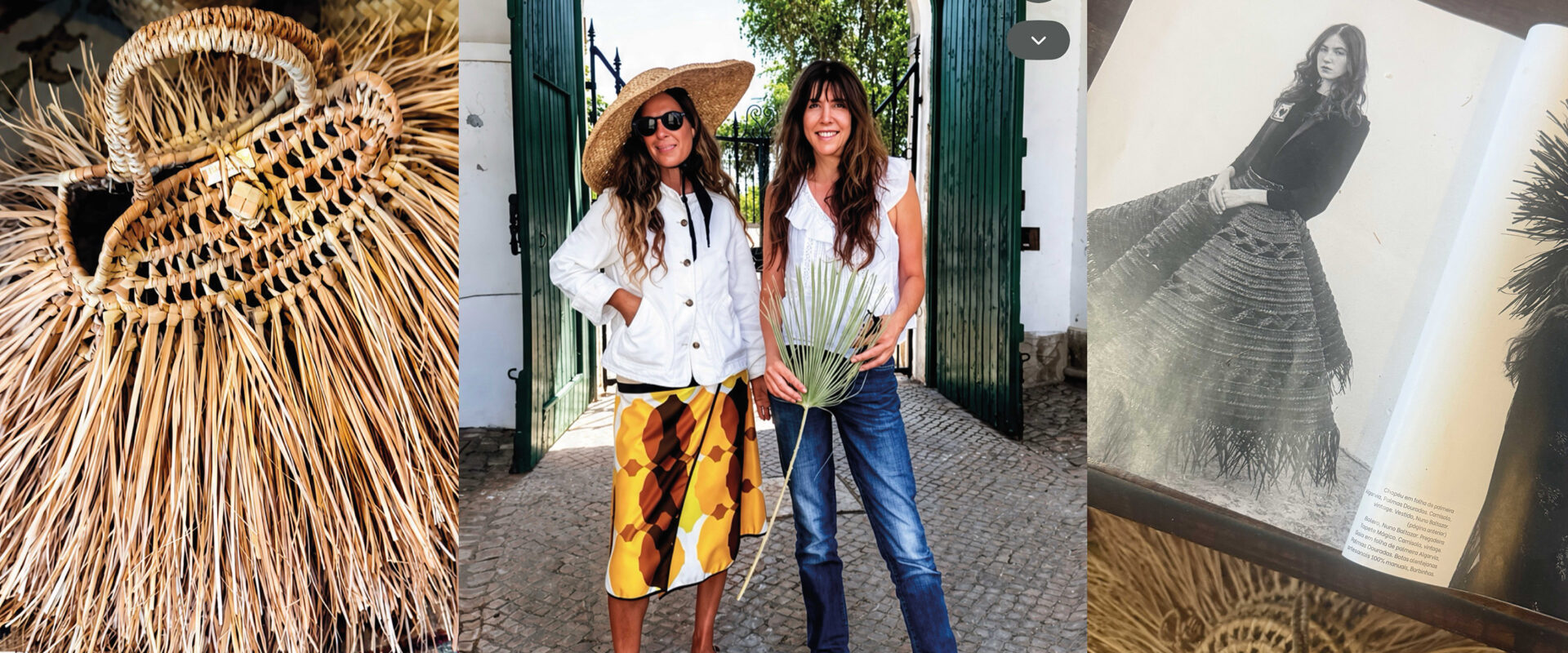
When Maria João Gomes moved to São Brás de Alportel, in the Algarve, in 2010, she found a centuries-old craft standing still — the same palm-leaf baskets, made the same way, by a dwindling handful of elderly artisans. She saw something else: a material with far more to offer.
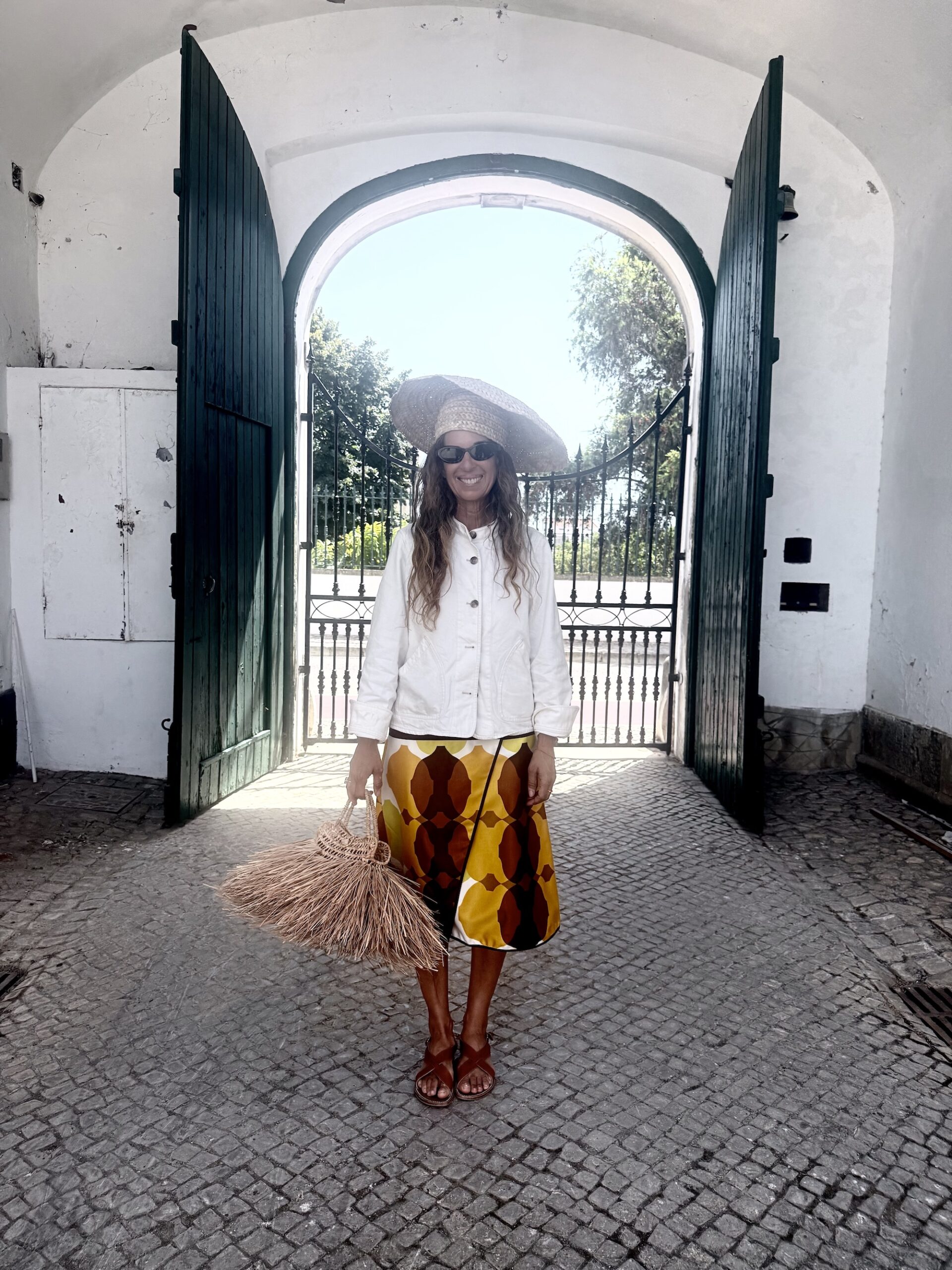
Under her brand, Palmas Douradas, Maria João has taken that same painstaking, entirely plant-based process — leaves harvested, dried, stripped, and hand-braided over days — and pushed it into new territory, from home decor to abstract art to a collaboration with the House of Christian Louboutin, who approached her after her work had already made a name for itself in France.
In our conversation, she talks about that meticulous craft, how it found its way into haute couture, and the rooted, unhurried life in the Algarve that keeps her grounded between it all.
IRMA: What drew you back to the Algarve palm-weaving tradition, and what did your grandmother’s technique look like when you first learned it?
Maria João Gomes: What brought me back to this craft was moving to Portugal… specifically to the Algarve, to São Brás de Alportel, in 2010. I realized that this art form was underappreciated. A few elderly artisans were making the exact same baskets and everyday objects without any innovation. I saw infinite possibilities for design and creation.
IRMA: Walk us through a piece from start to finish, from collecting the palm leaves in the mountains to the finished bag or hat.
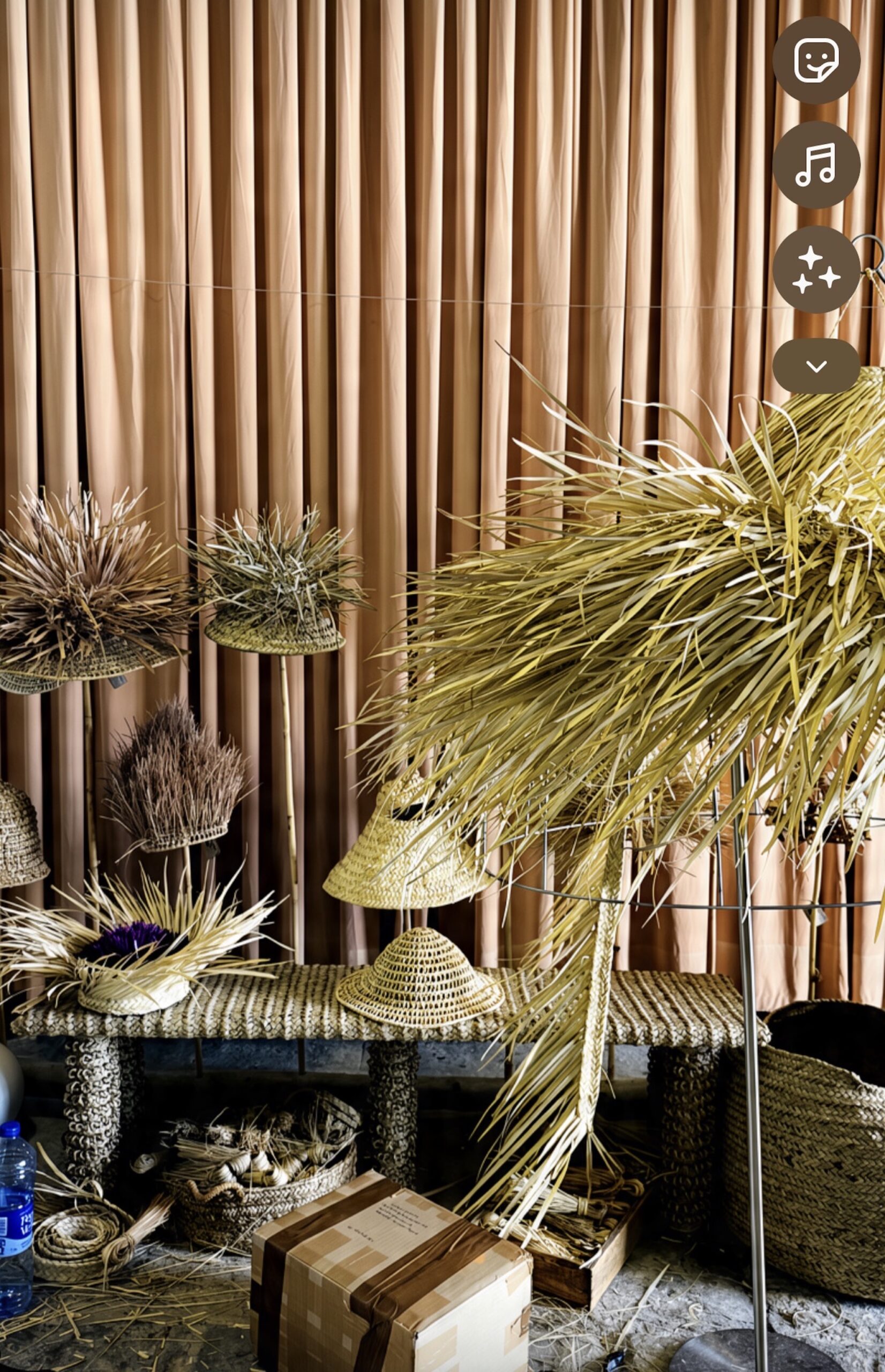
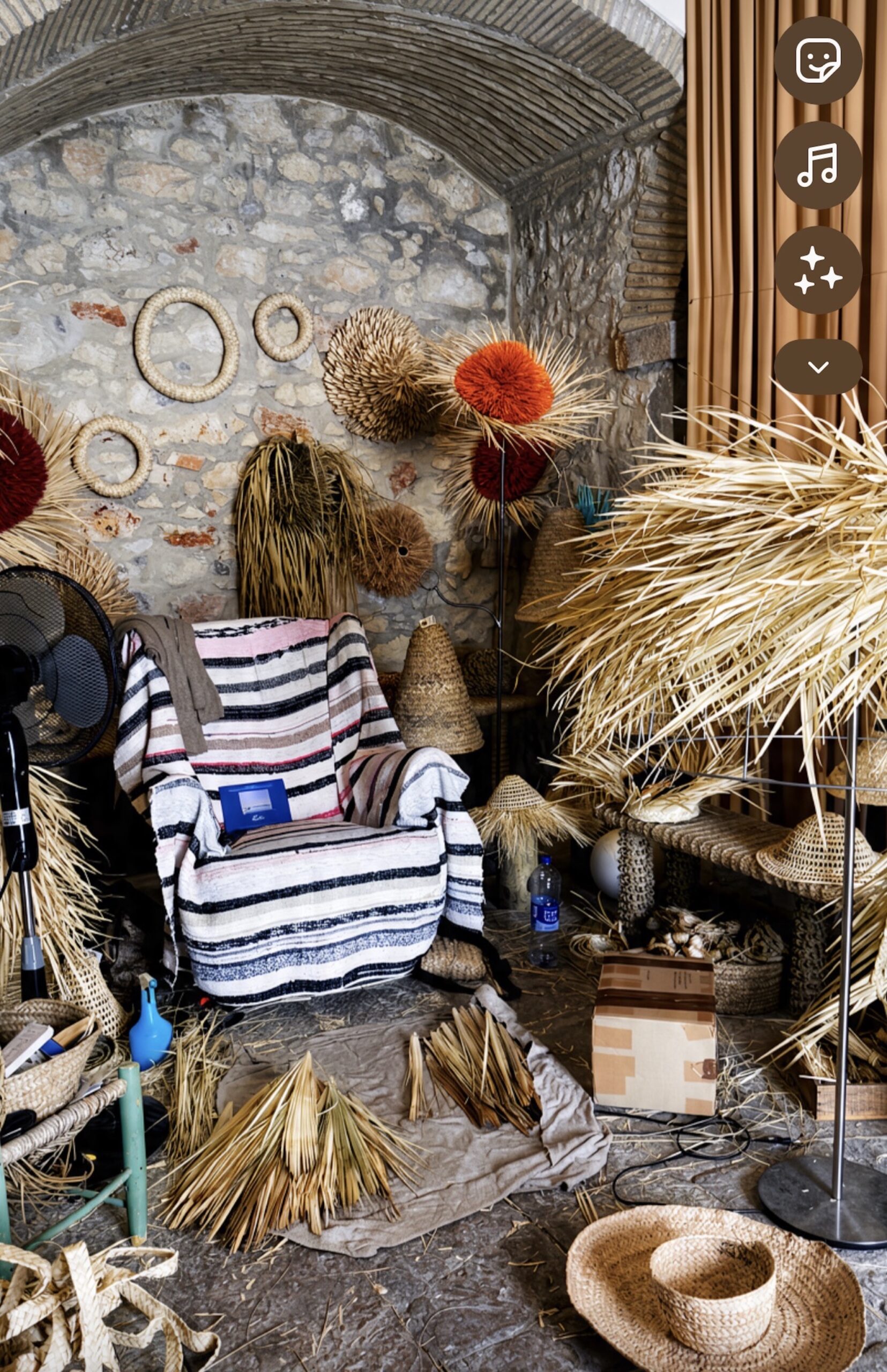
Maria João Gomes: The process of creating a piece is quite painstaking. First, I harvest the leaves (or collect them from people who give them to me) and set them out to dry for a week, turning them over every day. Next, I open the leaves, separate each fiber, and bundle them up. I wash a bundle in cold water, wrap it in a towel, and the next day I strip the sides with a needle so everything is a uniform size. Then, I begin plaiting a long braid, weaving in palm leaf by palm leaf, and craft a cord to sew the braid together and shape the piece. Everything is plant-based from start to finish.
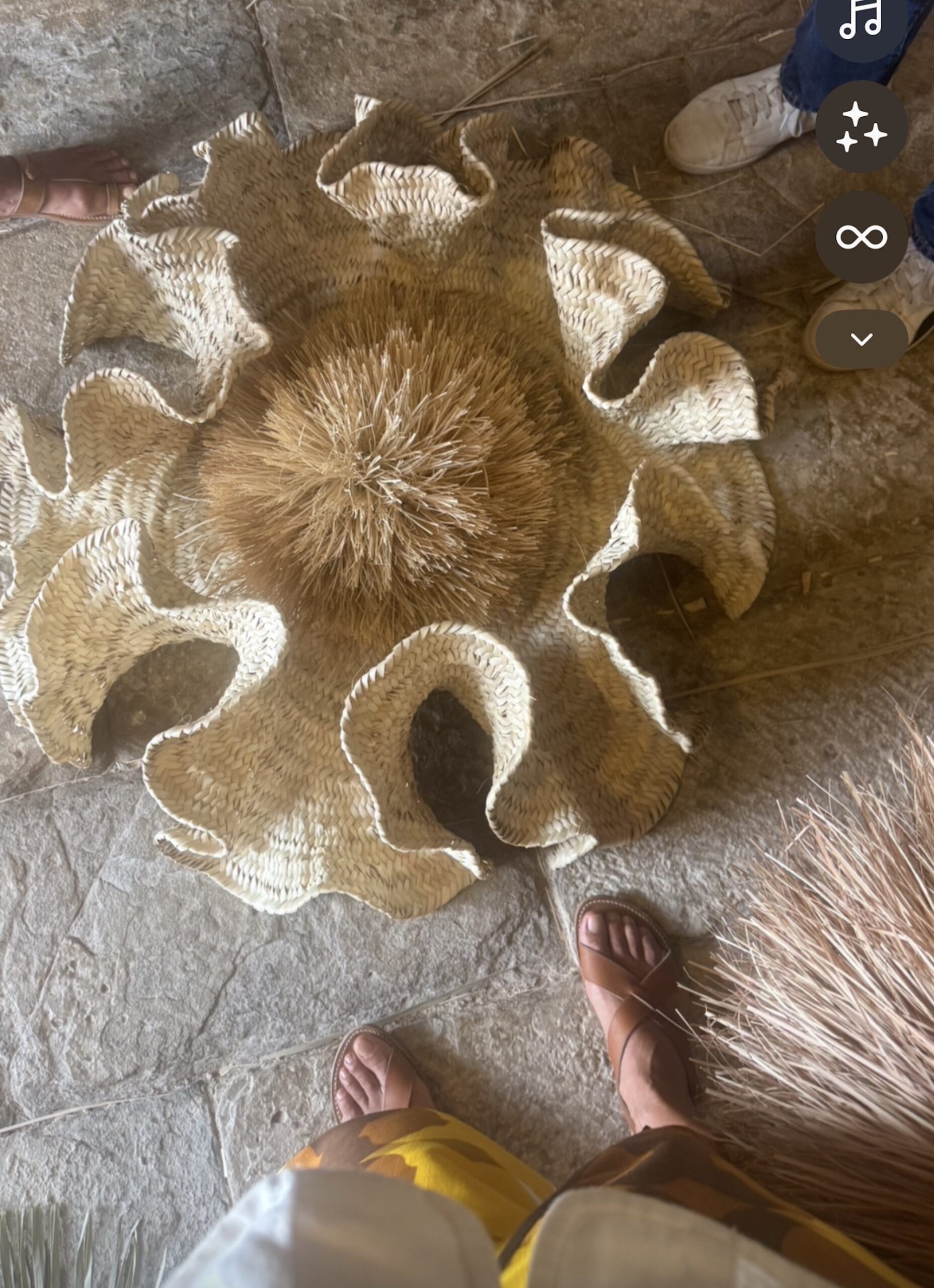
IRMA: How did the collaboration with Christian Louboutin come about, and what was it like adapting a centuries-old craft for haute couture?
Maria João Gomes: Adapting my work to haute couture is effortless: it’s a matter of following the same process, but with a haute couture design. That’s what I’ve always done, so partnering with Christian Louboutin was a natural continuation of my work. In France, what I do is quite well-known. The House of Louboutin reached out to me by email.
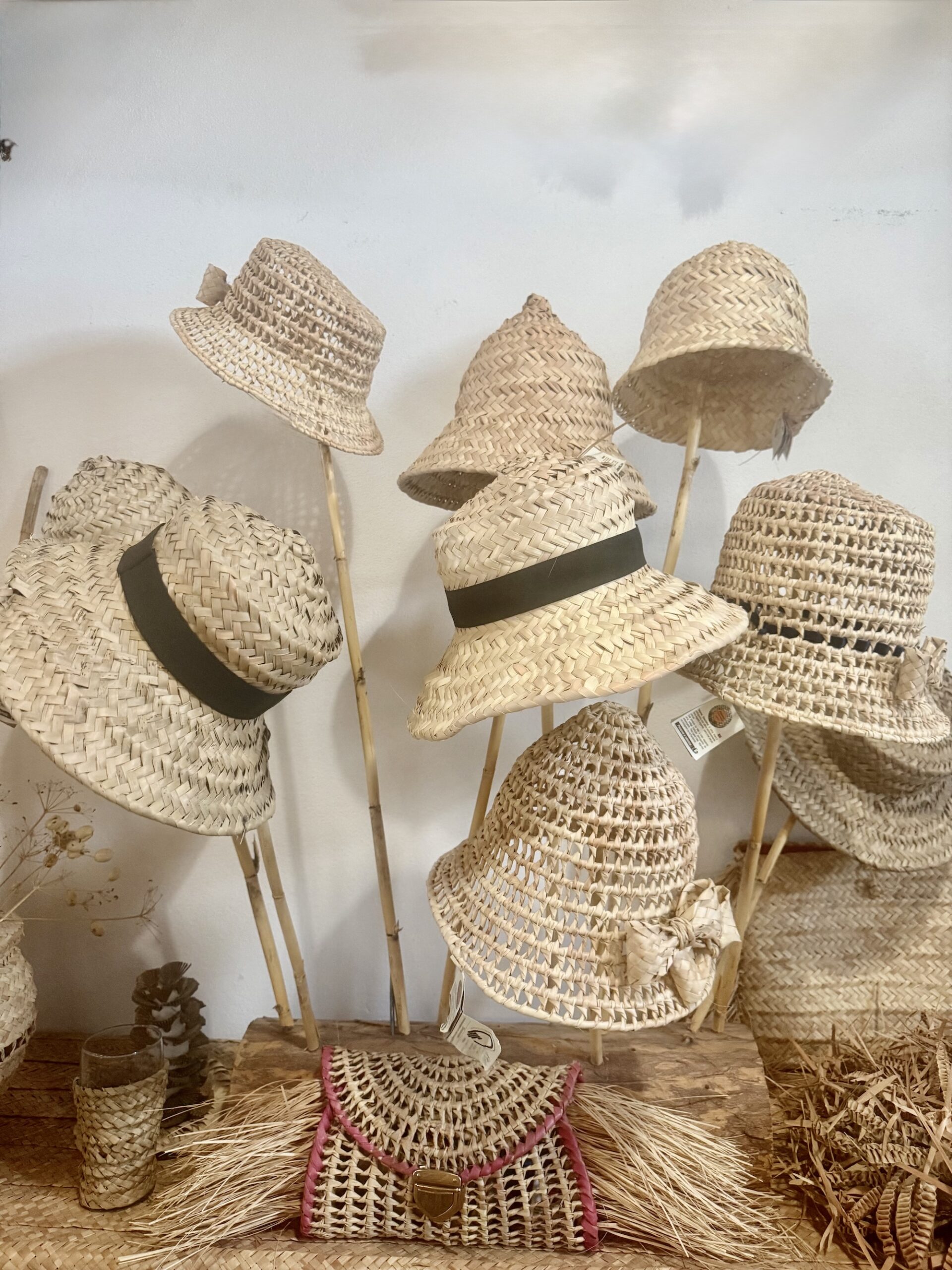
IRMA: Palmas Douradas is rooted in São Brás de Alportel, yet your work has traveled to Paris, Lisbon and beyond. How do you keep the piece authentically Algarvian even when it’s shown on an international stage?
Maria João Gomes: As long as the raw material remains genuine, nothing will alter the essence of my work, no matter how modern or contemporary the final piece may be. I sell worldwide — not only within Europe, but beyond. I also participate in contemporary art exhibitions featuring more abstract pieces.
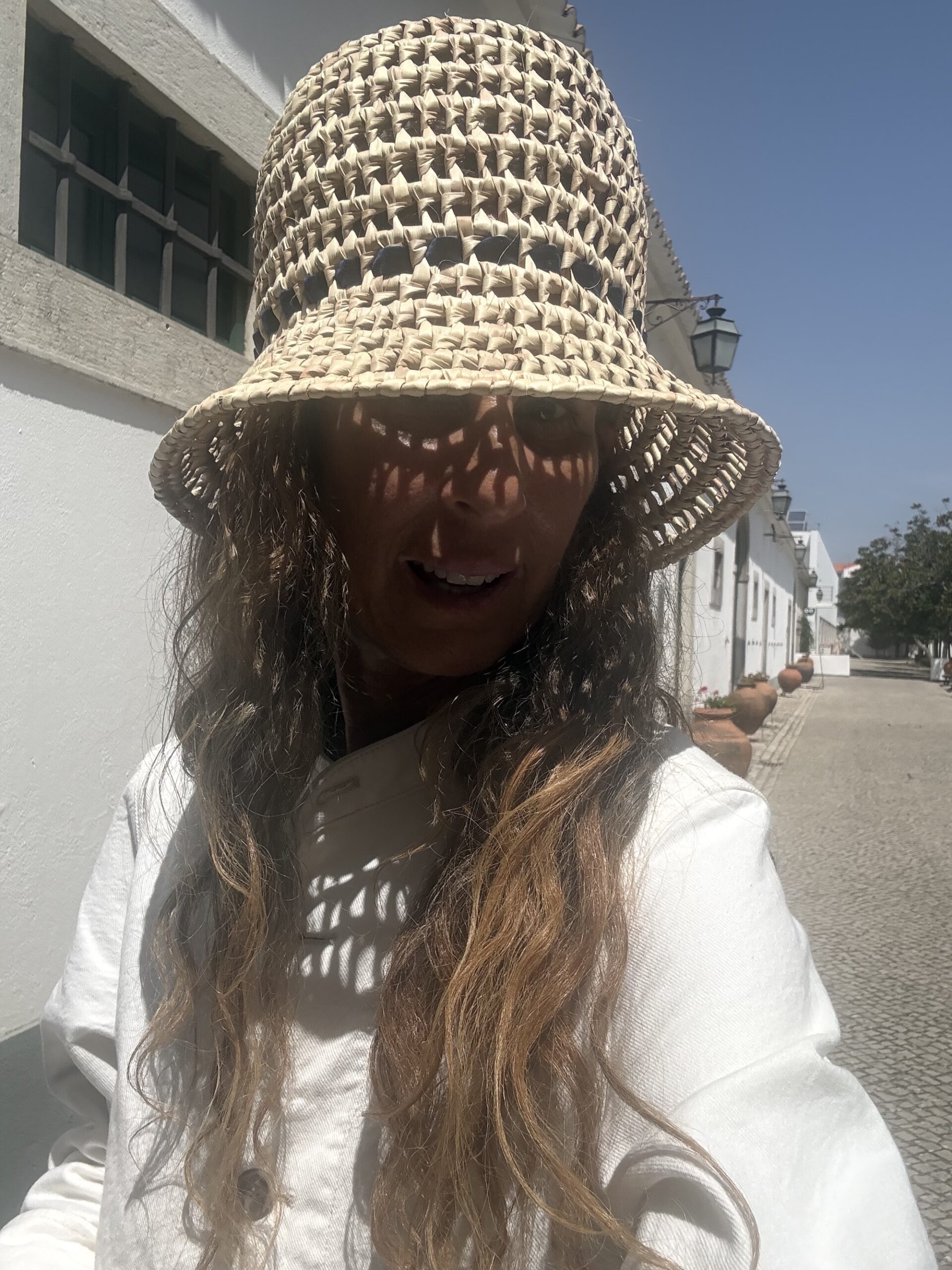
IRMA: You’re now teaching your own grandchildren the craft. What do you most want the next generation to carry forward, and what do you hope for Palmas Douradas in the years ahead?
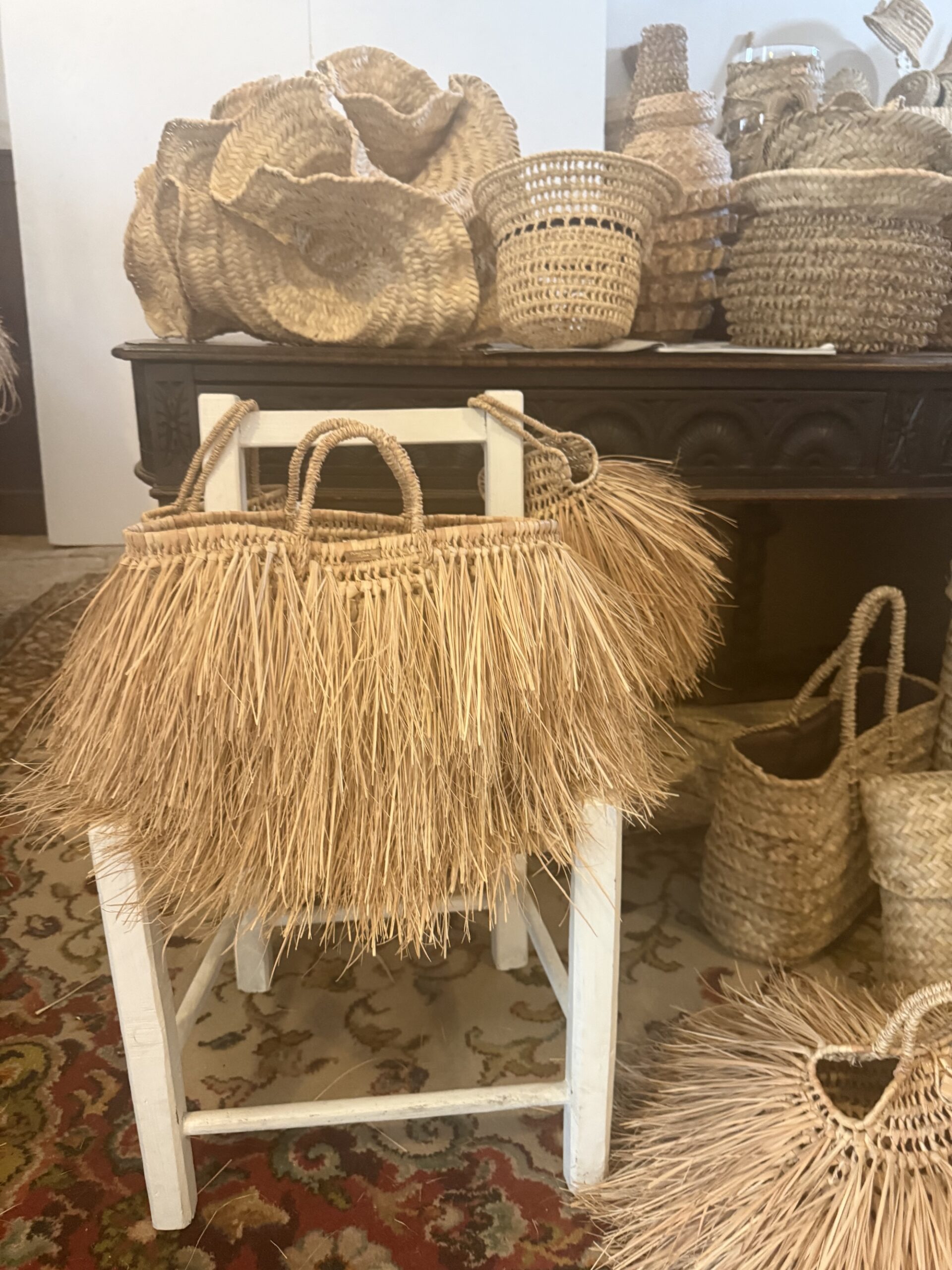
Maria João Gomes: I’m teaching my granddaughter because she shows a genuine interest. Who knows, maybe one day she’ll want to take over the brand… otherwise, the brand dies with me. It’s a small brand that relies heavily on my own design and creative vision, whether in home decor, fashion, or fine art.
PERSONAL PREFERENCES & LIFESTYLE
“My favorite spot in the Algarve is the mountains… specifically a place crossed by a stream where I love to sit and listen to the sounds of the countryside.”
“As for restaurants, I go to the one right next door to my house. I rarely go out, and whenever I feel the need for a bit of city bustle, I travel to Paris for two or three days, where I still have friends and family. I live a fairly routine life, balanced between my work and my family.”
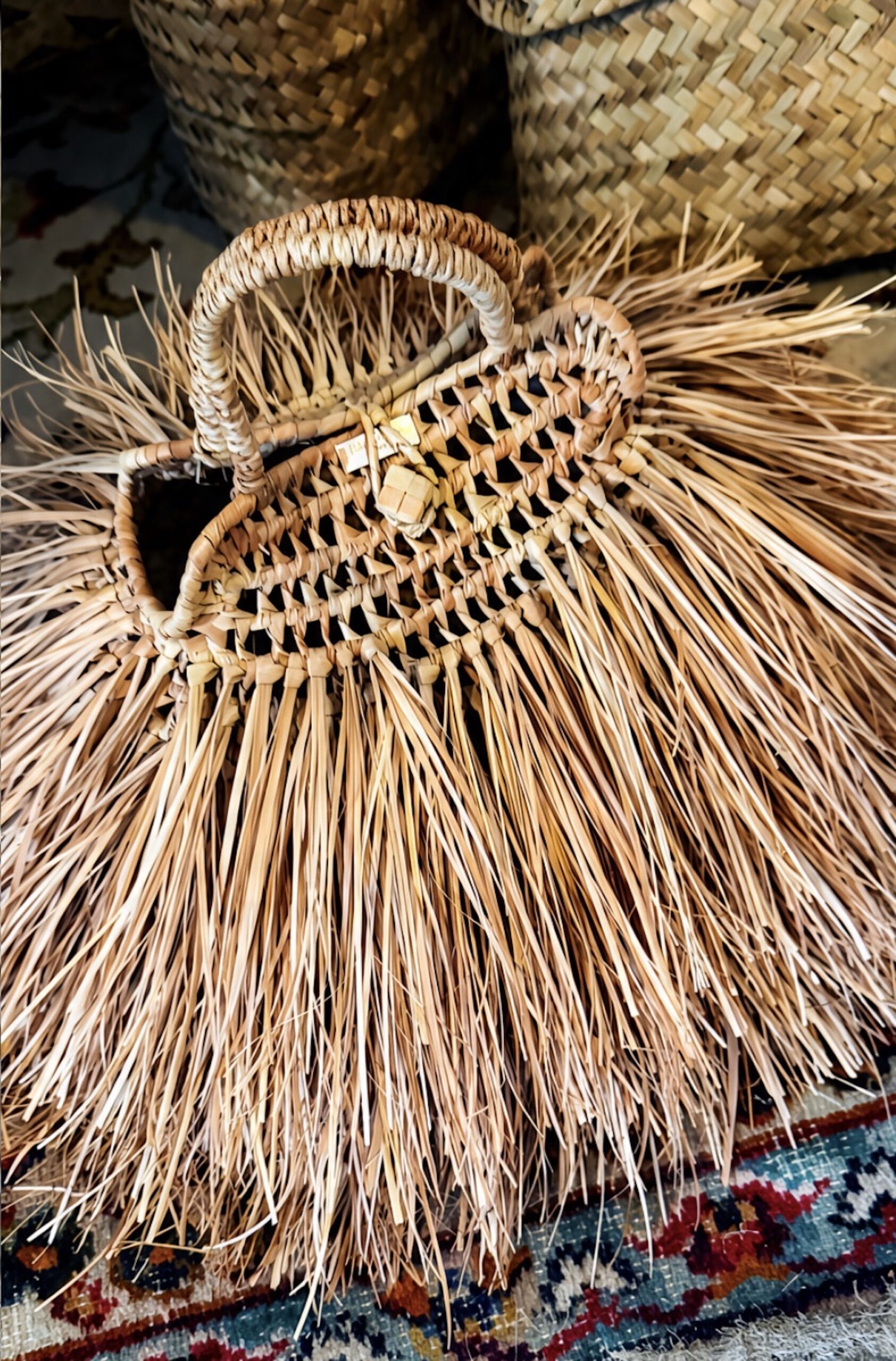
“For Maria João Gomes, the craft and the mountain stream she returns to are cut from the same cloth — patient, plant-based, and entirely her own.”