
Fashion moves fast. That is not an observation anymore — it is simply the condition we dress. A new collection every few weeks, a trend cycle that lasts the length of a social media story, garments designed to be seen once and forgotten. We have all made peace with some version of this. Most of us have also, quietly, started to push back against it.
Which is why, when Zara announced a summer collaboration with Marisa Berenson, it felt like something worth pausing for.
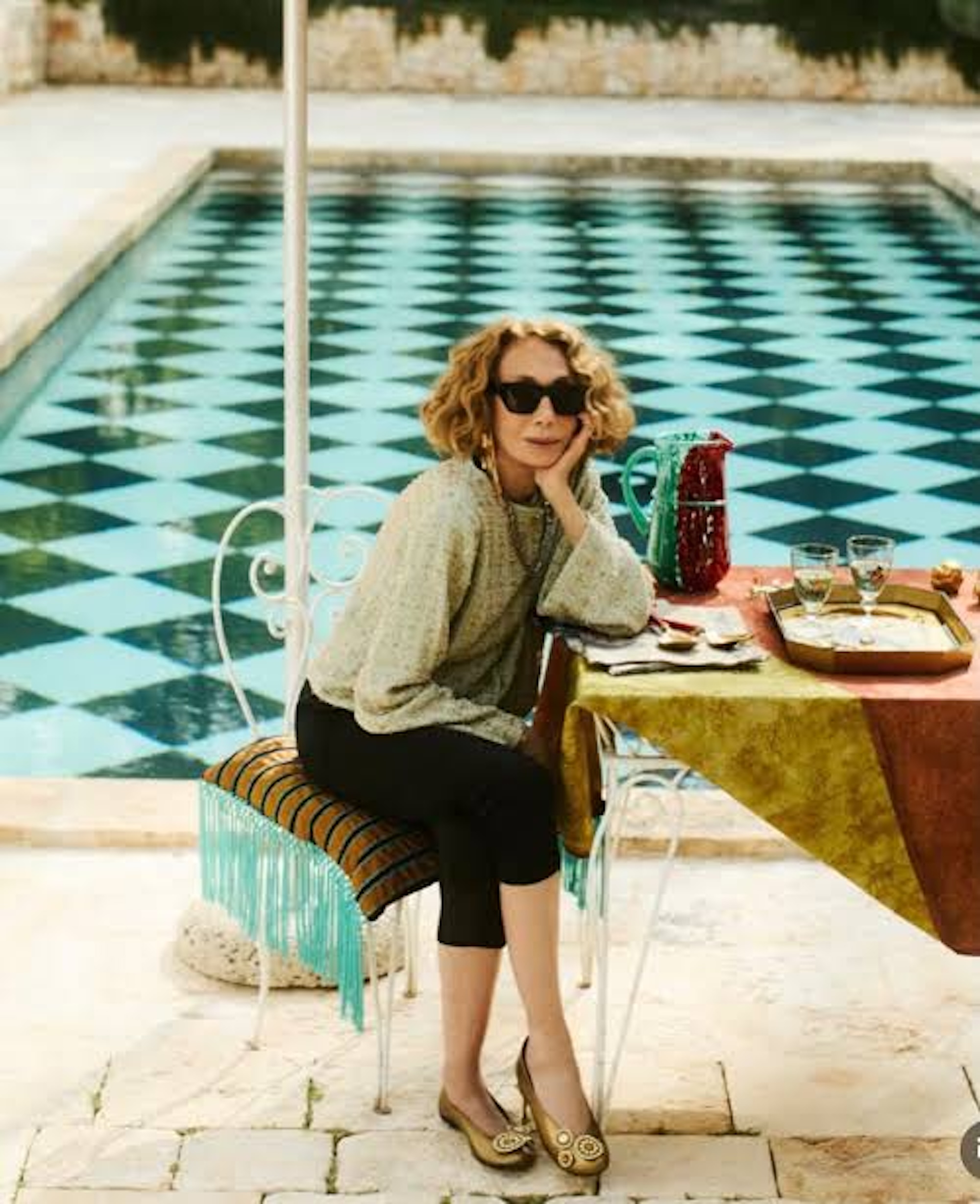
Not because a major high street brand working with an iconic personality is unusual. It is not. But because the choice of Berenson specifically signals something different — a deliberate reaching back toward a time when dressing was slower, more considered, and deeply personal. Berenson is not a content creator or a trending face. She is a woman who has spent decades understanding that style is accumulated. That accessories are not afterthoughts but a statement. That the way you wear something — the angle of a collar, the weight of a cuff, the decision to leave one button undone — is the difference between wearing clothes and meaning them.
The Case for the Unlikely Pairing
Slow fashion, in its purest definition, is about investment — in quality, in longevity, in pieces that earn their place in a wardrobe over years rather than seasons. It is a philosophy, and like all philosophies it is easier to hold in theory than in practice, but with our Jasmin Khezri Collection we follow this theorory and as all pieces are produced by demand in our Munich atelier (delivery 5-8 days) we operate clean and fast.
The sequins skirt from the House of Marisa Berenson for Zara collaboration is one of those pieces that inspired us to look closer. It is fast fashion in its origin and its price point. It is slow fashion in its intention — designed with a woman in mind who has never once dressed in a hurry, and who would find the concept of disposable glamour faintly absurd.
How We Styled It — and Why It Matters
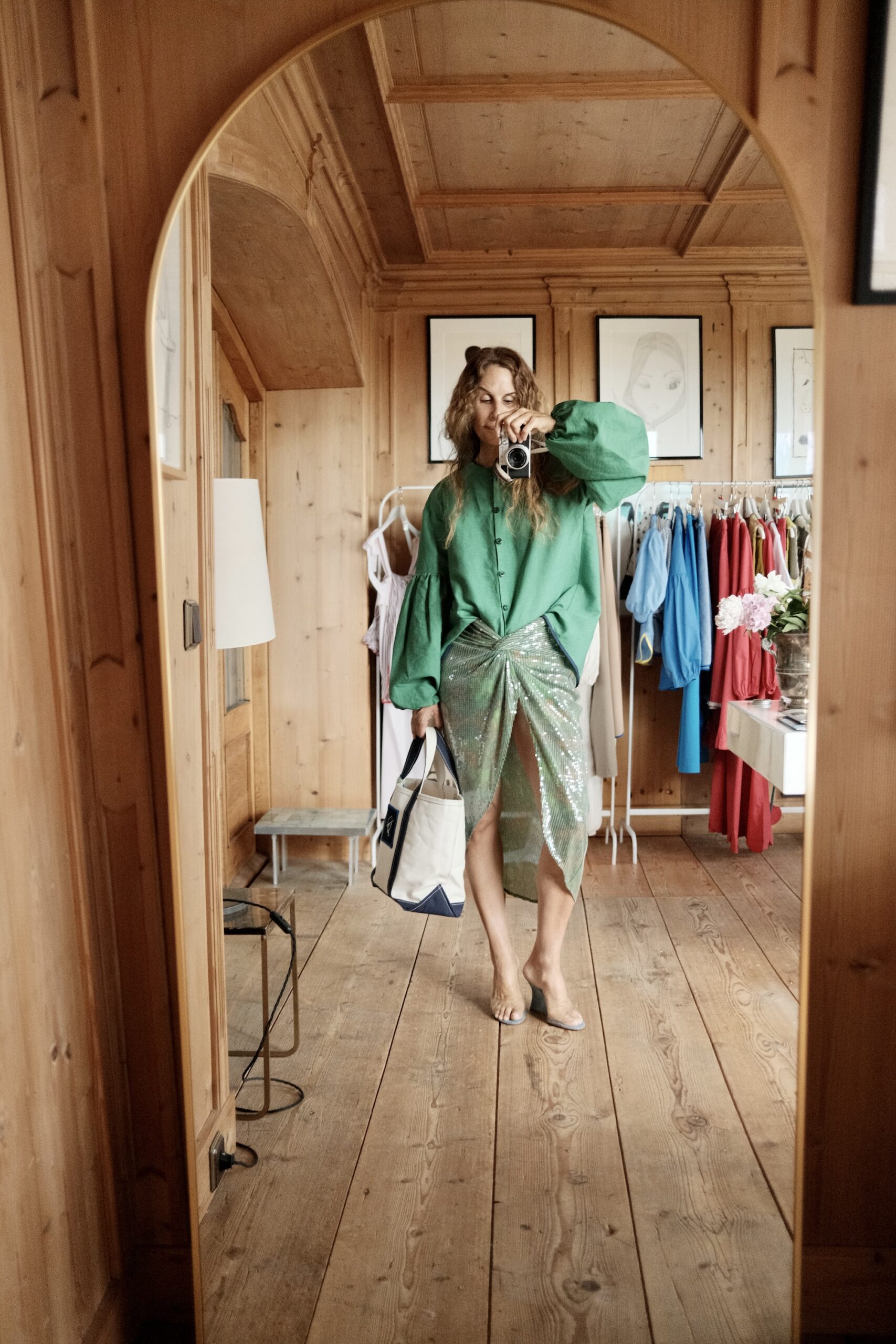
At IRMASWORLD, the Jasmin Khezri Collection is built entirely on the slow principle. Small runs. Considered fabrics. Pieces designed to move between occasions, seasons, and decades. When we placed the Zara skirt alongside our own collection, we were not simply styling an outfit. We were asking a question about whether fast and slow can coexist in the same wardrobe with integrity. The answer, it turns out, is yes — when both sides bring something genuine to the conversation.
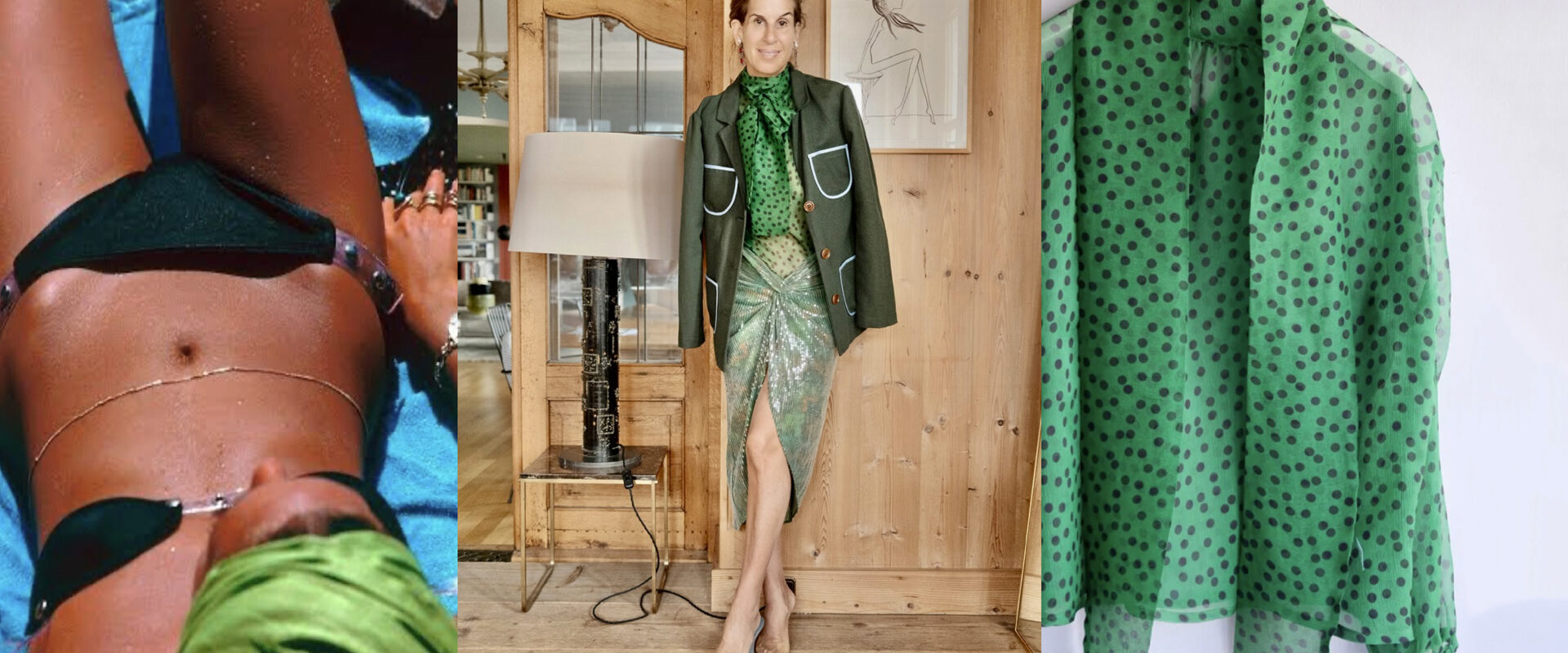
The Cala Blouse in chiffon silk, worn with high mules. Silk against sequins is a study in surfaces — one fluid, one catching light.
The hand-knitted Polo with flat boat shoes. This is perhaps the most telling combination of the five. A hand-knitted garment is the definition of slow fashion — hours of craft compressed into something you wear against your skin. Paired with the high street sequins skirt, it dissolves the distinction entirely.
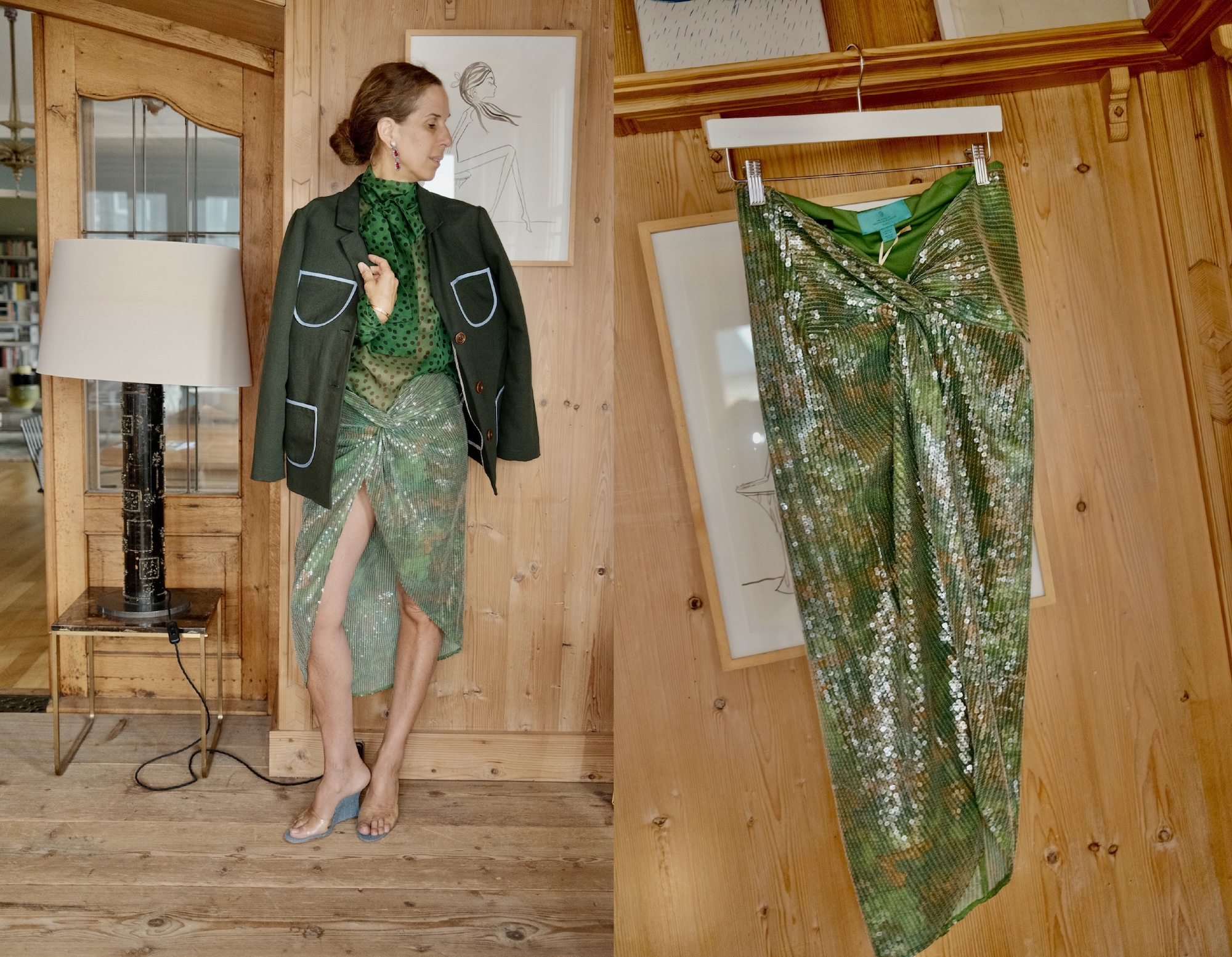
The Field Jacket in green linen, worn loose. Organic Linen is one of the oldest textiles in the world. It gets better with age, better with washing, better with use. A linen jacket worn over a sequins skirt is a conversation between the ancient and the festive.
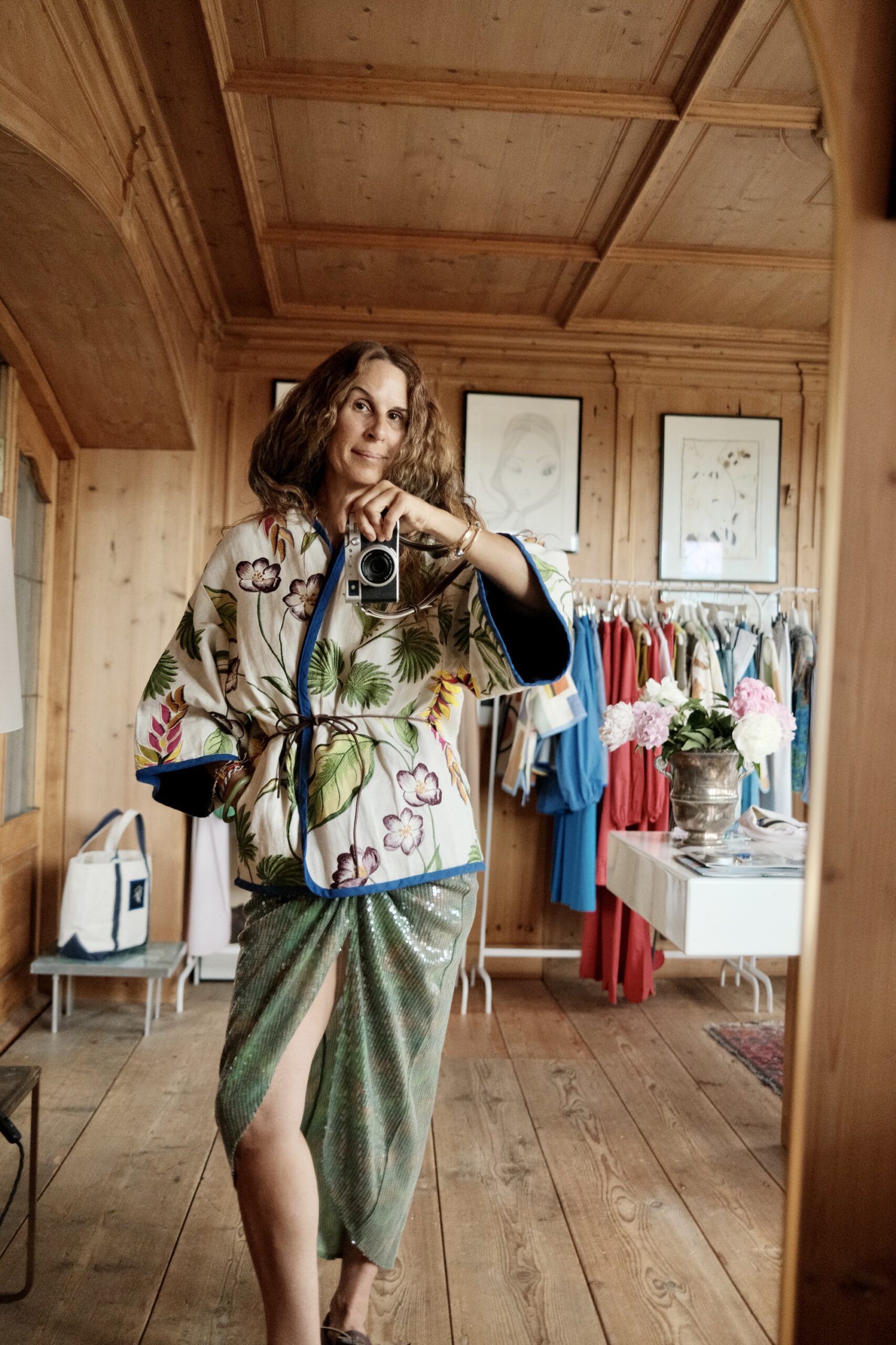
The Kimono Jacket, tailored in Pierre Frey fabric. Pierre Frey is a French fabric house with nearly a century of history. When you build a garment from their cloth, you are inheriting that history — every thread carries a provenance. The Kimono Jacket worn over the Berenson sequins skirt is layering of histories that turns a high street piece into something that belongs in a much longer story.
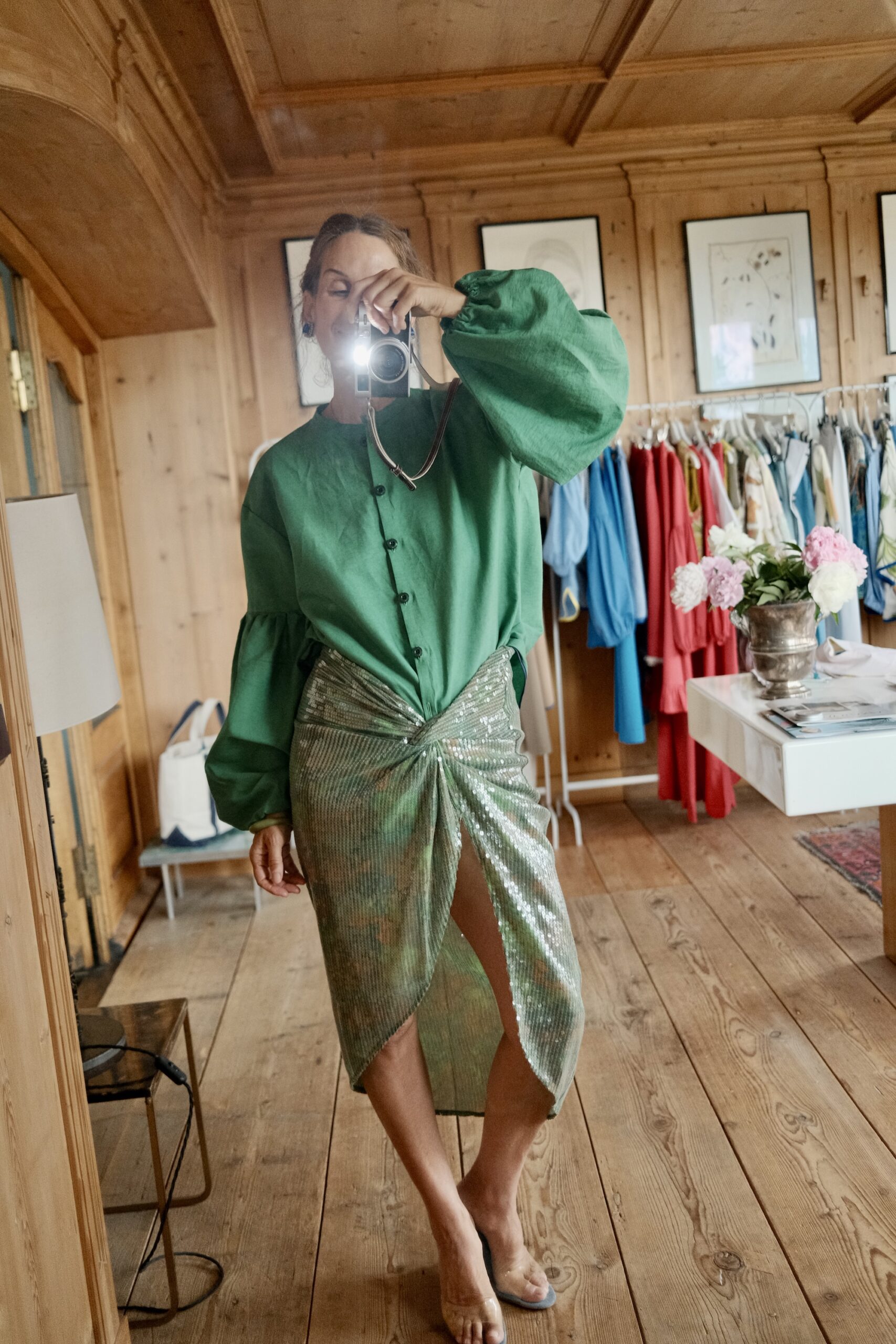
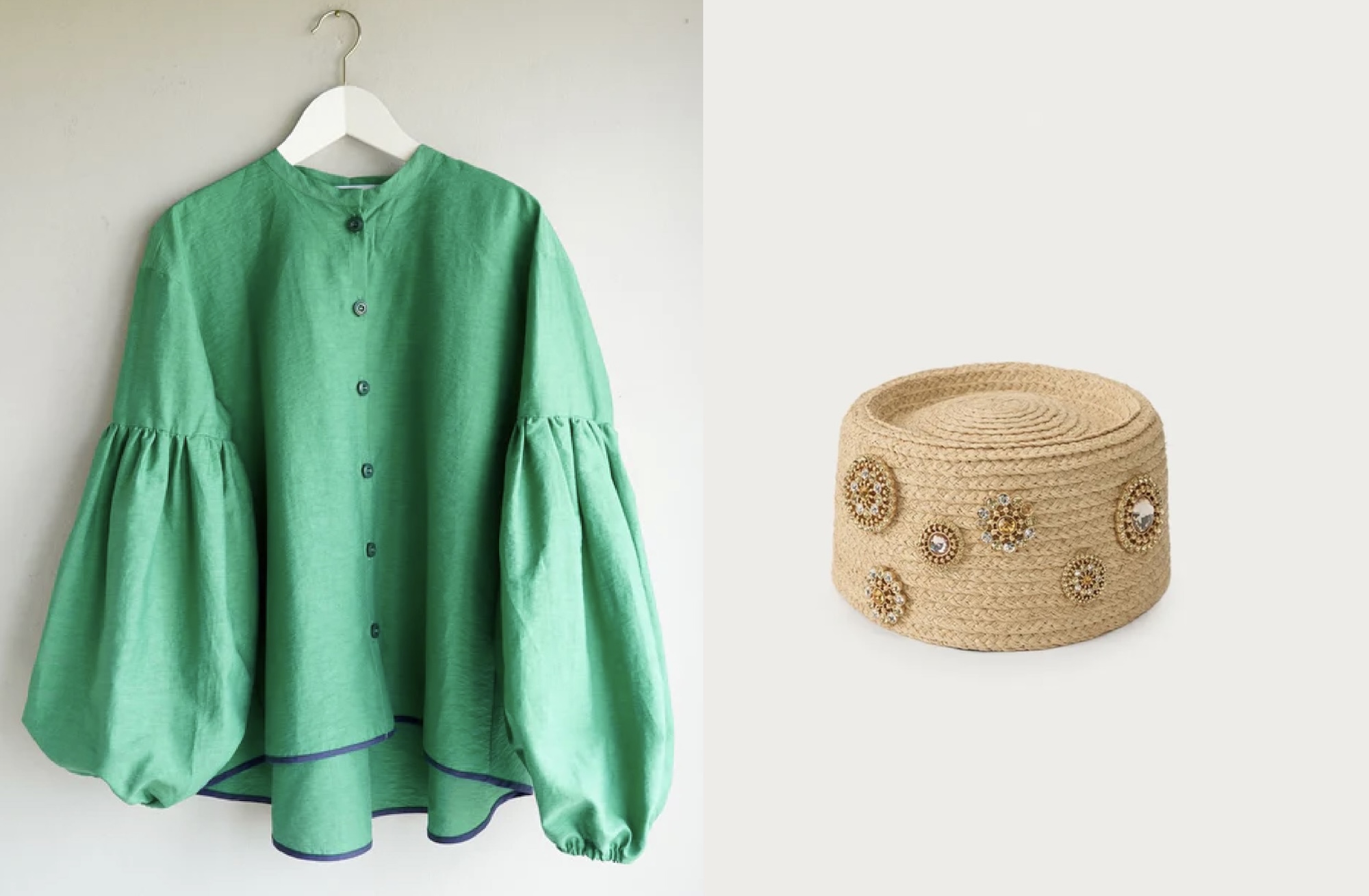
The Seville Couture Blouse in green cotton and linen, with the signature trumpet sleeve. A green that appears differently in morning light than in evening.— the kind of piece that will be in a wardrobe in fifteen years, still asking to be worn. Against the sequins skirt it creates a look that moves between a lunch table and a rooftop without effort, which is the precise point of building a wardrobe slowly and well.
What Berenson Understood, and What We Are Relearning
Marisa Berenson dressed in an era before fast fashion existed as a concept, which means she dressed in an era when every choice was, by necessity, a slower one and more based on collecting, . The accessories are pieces gathered over years, worn in new combinations, assigned new meanings each time you combine them with a garment. But in the end it is all about personal style, something you cannot get neither by fast nor slow fashion.
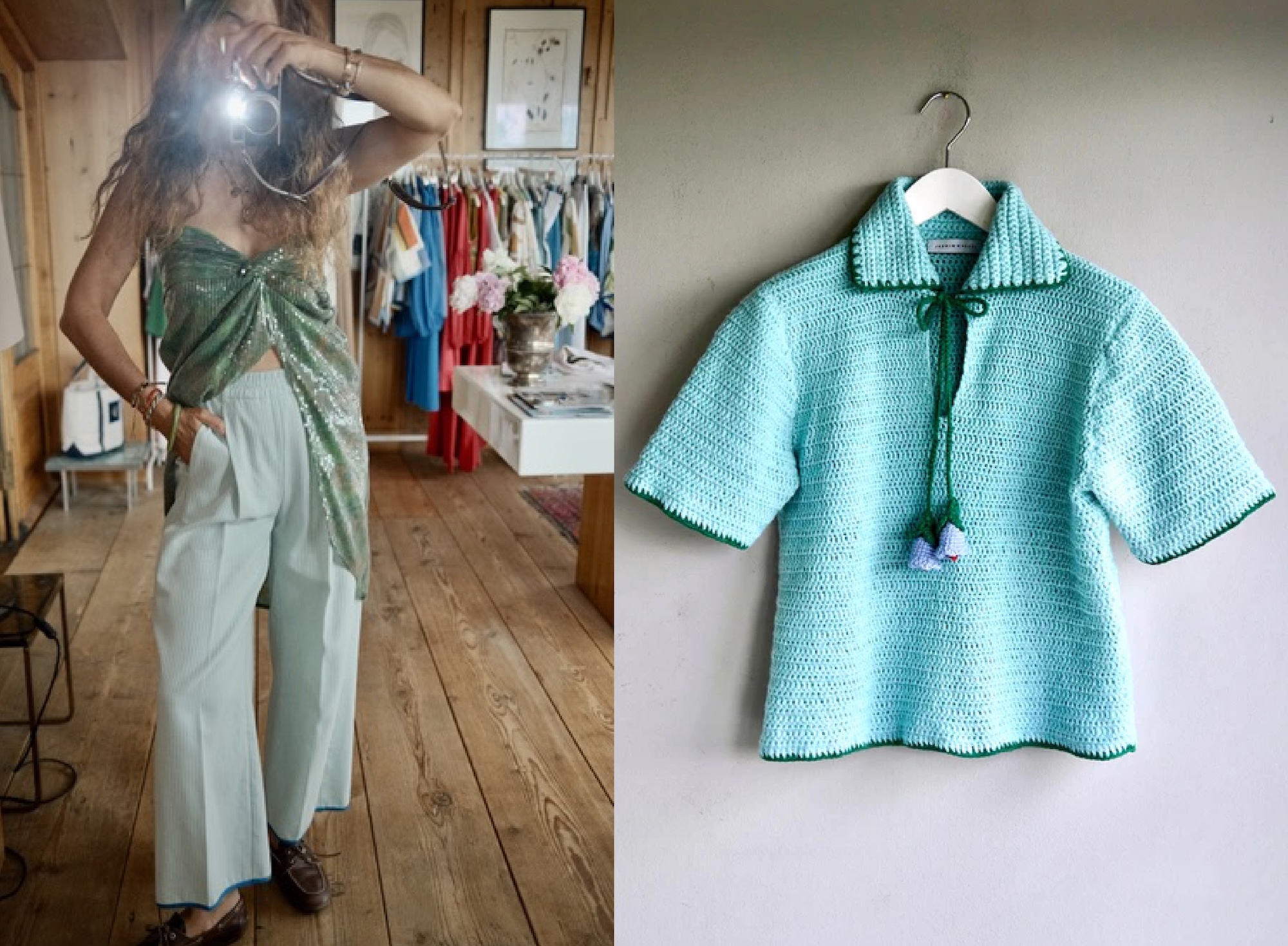
Sequins skirt: Marisa Berenson for Zara. All other pieces: Jasmin Khezri Collection. Styling: IRMASWORLD